
Last Updated on March 7, 2021
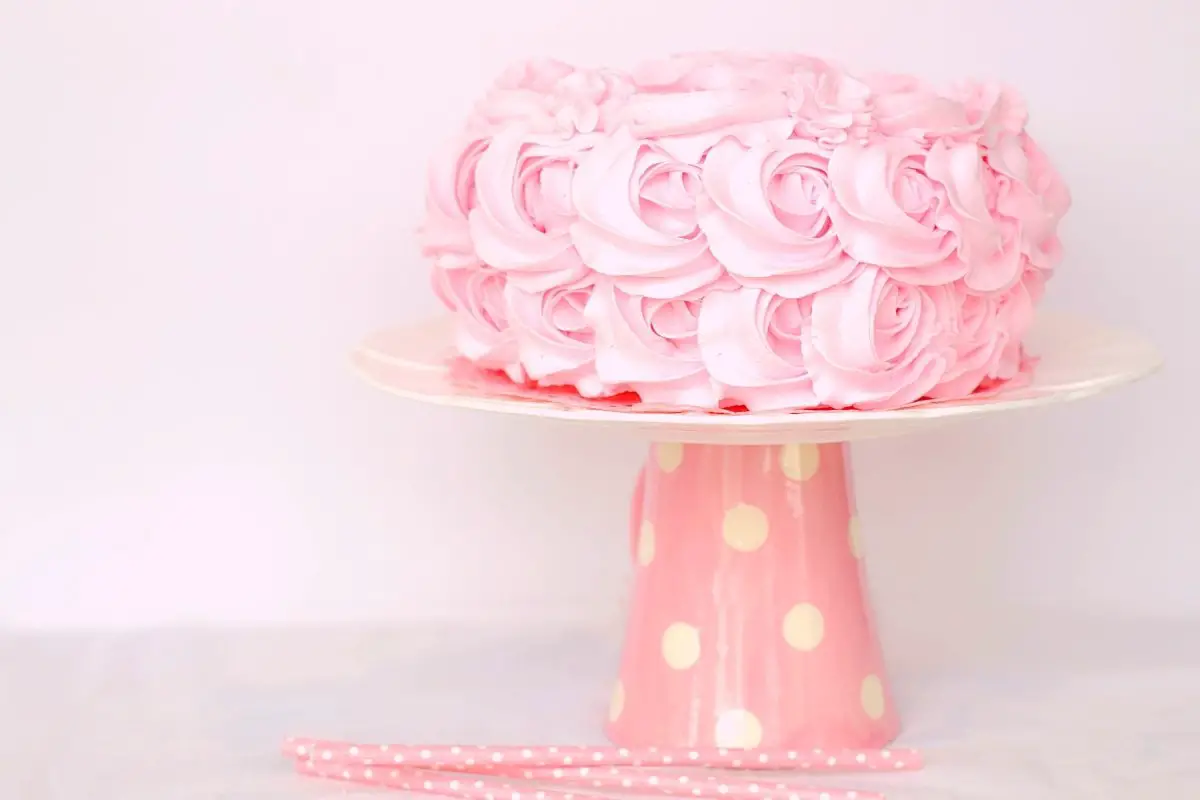
Want to know how to make pink frosting with food coloring? Before, liquid food coloring is the best choice, but now it’s gel food coloring. Essentially, you can use food coloring, especially in the holidays, to create sweet confections, candies, and frostings. In addition to that, frostings require enhancers to add aesthetics. Moreover, it makes frosting in pastries, cakes, and bread more colorful. With that, food coloring can be natural, powdered, and gel-based.
Gel Paste Dye Food Coloring
It is made out of synthetic coloring with a corn syrup base, glycerine, and water. In addition to that, it is best to dip a toothpick in the pastes. Then, add a tiny amount of it each time since it can be exceedingly dark when using the food coloring in large amounts. Because of this, it is more vibrant and more concentrated than liquid gel dye. Likewise, it is ideal for coloring big quantities of frostings.
In addition to that, it is typically available at baking stores or online. Moreover, you can refer to gel paste dye as a concentrated gel. Additionally, it is an excellent choice if you have clumsy hands or if you want to prevent a mess in the kitchen.
Is Gel Food Coloring Harmful?
Generally, it would help if you did not consume too much food coloring. However, there is no strict evidence of the dangers of gel food coloring. In addition to that, it is not dangerous to your health because it does not contain any harmful ingredients. As an alternative, you can use all-natural products food coloring with natural sources of plants and fruits. Likewise, you can always buy food coloring gels that do not contain any artificial ingredients.
Furthermore, most people can eat baked goods with gel food coloring and have no problems whatsoever, except for sensitive children with hyperactivity. Likewise, people may have allergic reactions when consuming it. Although, it is best to avoid eating food coloring in unhealthy processed baked goods.
Also, learn How To Make Dark Red Icing With Food Coloring and How to Make Black Icing the Easy Way
What You Will Need to Make Pink Frosting with Food Coloring
Ingredients
- 2 cups of vanilla frosting
- 1/4 tsp of red gel food coloring
- 1 tsp of vanilla extract
Equipment
- Mixing bowl
- Measuring cups
- Measuring spoon
- Rubber spatula
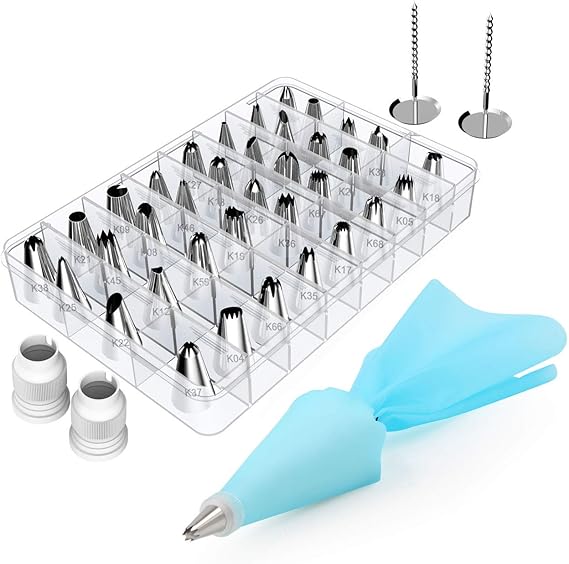
- Pastry bag
- Pastry tip
Kootek 42 Pieces Cake Decorating Tools Kits Supplies
Step by Step Instructions to Make Pink Frosting without White Food Coloring
Step 1
Before anything else, place the vanilla frosting in a mixing bowl; make sure it is at room temperature before mixing it.
Step 2
Then, add the red gel food coloring, and thoroughly mix the food coloring to the frosting using a rubber spatula. Make sure not to make some air so that there will not be any air bubbles when piping.
Step 3
Afterward, gradually add 1/16 tsp of red food coloring when the color is too light till the right color is achieved. If the color ends up darker, add a tablespoon of vanilla frosting to lighten until the desired color is acquired.
Step 4
After that, add the vanilla extract to the pink vanilla frosting and incorporate it thoroughly into the mixture. Please put it in the fridge to chill for 10 minutes before placing it in the pastry bag.
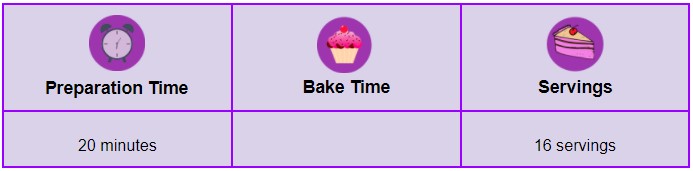
Servings and Preparation Time for Pink Frosting with Food Coloring
Tips and Tricks on How to Make Pink Frosting with Food Coloring
When dealing with frosting, it is better to use gel or paste food coloring than liquid because it will liquefy it. In addition to that, you can use neon pink if you want a more vibrant color. Likewise, if you are a beginner or do not have that much food coloring, I recommend that you start color sampling with a small bowl.
Moreover, a useful trick is to cover the frosting with airtight plastic wrap and let it sit for a few hours; the color will deepen over time. Over-dying your frosting will make it taste bitter; you can restart and make a fresh batch; be cautious in the second trial.
Remember that you always start blending the food coloring in little quantities because it builds the color up in the long run. In addition to that, it is much easier to add color in than to discard it in case you messed up by making it too dark or too bright. Because of this, it usually takes plenty of time. However, it will be a lot effective rather than starting all over again.

Zarah is an experienced pastry chef whose creations have delighted countless customers. With a passion for baking, Zarah has developed a unique style that combines classic techniques with modern flavors. Her desserts are consistently crafted with the finest ingredients, and her attention to detail is evident in the stunning and delectable results. Zarah has a wealth of experience in the pastry kitchen, and loves to share her knowledge with others. Whether it is teaching a class or creating a custom cake for a special occasion, Zarah is committed to making sure every customer is satisfied.